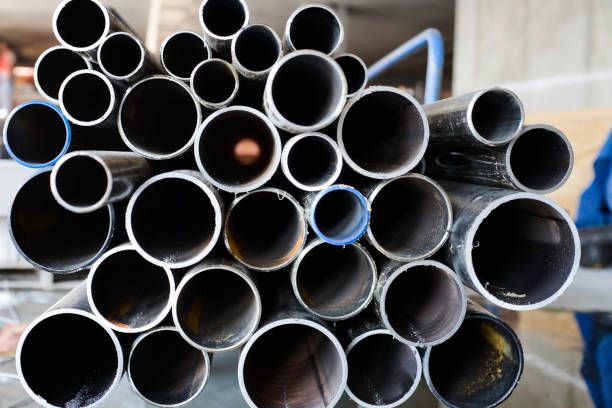
Piping system failures often trace back to incorrect material choices made during the design phase. Engineers face pressure to balance initial costs against lifecycle durability, especially in environments where corrosion, temperature swings, or mechanical stress can shorten service life of these pipes. Selecting between austenitic stainless steels and duplex grades requires understanding how each material responds to real-world operating conditions in harsh environments.
Understanding Austenitic Stainless Steel Performance
Standard Grade Applications: 304 stainless steel tube serves well in moderate environments where corrosion resistance matters but extreme conditions are absent. This grade handles general industrial fluids, potable water systems, and food processing equipment without issue. Its austenitic structure provides good formability and weldability, making fabrication straightforward for most shop environments.
Temperature and Cost Factors: 2205 duplex pipe combines austenitic and ferritic microstructures to deliver roughly twice the yield strength of 304 at around 65 ksi. This dual-phase structure provides superior resistance to chloride stress corrosion cracking, pitting, and crevice corrosion in harsh environments. Offshore platforms, desalination plants, and chemical processing facilities often specify 2205 for piping exposed to seawater or aggressive chemicals.
Mechanical Limitations to Consider: Stress corrosion cracking becomes a concern when a 304 tube encounters chloride-containing environments under tensile stress. The yield strength of roughly 30 ksi at room temperature means thicker walls may be needed in high-pressure applications compared to stronger alternatives. Fatigue resistance under cyclic loading is adequate for many applications but not exceptional.
Addressing Design Constraints: Engineers should account for these limitations when designing systems subject to vibration, thermal cycling, or sustained mechanical loads:
- Welded joints require proper heat treatment in some cases to restore corrosion resistance
- Temperature limits reach about 1600°F in oxidizing atmospheres
- Strength drops significantly above 800°F under sustained loading
- Chloride exposure above 140°F increases stress corrosion cracking risk
Duplex Stainless Steel Advantages
Enhanced Strength Properties: The material maintains mechanical properties across a wider temperature range than standard austenitic grades, though it should not be used above 600°F for extended periods. Wall thickness reductions of 30-50% are possible compared to 304 in pressure-rated applications, which can offset higher material costs through reduced weight and installation expenses.
Weldability and Fabrication Factors: Welding 2205 requires more attention to heat input and cooling rates than 304 to maintain balanced microstructure. Filler metals must match the base material composition, and interpass temperatures need monitoring. The higher strength makes cold forming more difficult, requiring greater bending forces or intermediate annealing steps.
Application-Specific Selection Criteria
High-Velocity Fluid Systems: Erosion-corrosion in systems handling slurries, abrasive particles, or high-velocity fluids favors duplex grades. The combination of hardness and corrosion resistance extends service life where 304 would thin rapidly. Pipe schedules can be reduced due to higher allowable stress values, which improves flow characteristics in tight installations.
Fatigue-Critical Installations: Equipment subject to pressure fluctuations, vibration, or thermal cycling benefits from duplex steel’s superior fatigue strength. Heat exchangers, reciprocating compressor piping, and systems with frequent start-stop cycles see fewer crack initiations. The material absorbs energy better under cyclic loading compared to austenitic grades, reducing maintenance interventions.
Cost-Performance Tradeoffs: Projects with tight budgets and benign service conditions rarely justify duplex pipe pricing. A 304 system properly designed for its operating envelope will deliver decades of reliable service. The premium for 2205 makes sense when replacement costs, downtime risks, or safety factors demand maximum durability.
Specifying the right stainless steel grade requires matching material properties to actual service demands rather than defaulting to familiar options. Review your operating parameters, consult material property tables, and calculate wall thicknesses for both grades before finalizing specifications. The extra effort during design prevents costly mistakes that surface years later when systems underperform or fail prematurely.
Featured Image Source: https://media.gettyimages.com/id/84146546/photo/steel-pipe.jpg?s=612×612&w=0&k=20&c=5paxJ7KNHWD_EJAy2lkjnUesQ31lxqj07V-4tV_CIrI=