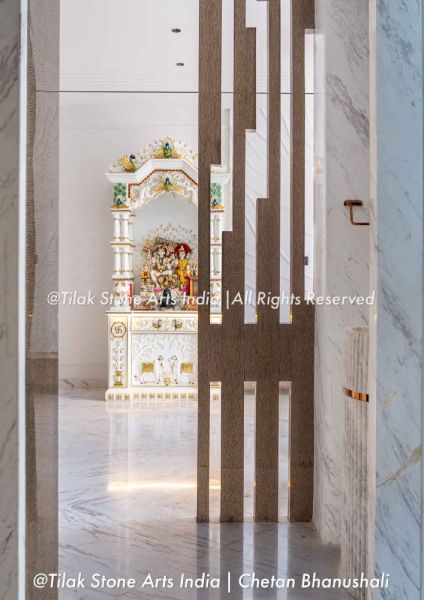
Modern homes often treat prayer spaces as afterthoughts, squeezed into spare corners or converted cupboards. This approach misses the deeper purpose of sacred design. A pooja room should feel like a natural extension of daily life, not a cramped obligation. Families need spaces that accommodate specific rituals, whether lighting diyas each evening or hosting weekly bhajan sessions.
Sacred Spaces That Move With Your Rituals
Material Choices That Support Daily Worship: A white marble temple provides the structural foundation for prayer spaces that withstand years of regular use. Vietnam White Marble creates surfaces that remain pristine with daily lamp lighting, flower offerings, and incense burning. The stone’s natural cooling properties suit homes in warmer climates where prayer sessions occur multiple times daily.
Spatial Flow Between Devotion and Daily Life: Indian pooja room design traditionally emphasises eastern or northeastern placement, but modern homes require flexibility. Perhaps your family gathers for prayers before breakfast, making kitchen proximity practical. Or maybe evening aarti happens in the living area, suggesting a design that opens the sacred zone. Vastu principles adapt to real-world movement patterns.
Material Variations for Different Design Aesthetics: Swiss White Marble offers subtle veining patterns that add character without overwhelming smaller prayer spaces. Super Fine White Vietnam Marble provides an almost translucent quality when backlit, creating ethereal atmospheres during evening worship. These material choices impact how natural light interacts with the space throughout different times of day.
When Prayer Schedules Shape Physical Space
Accommodating Multiple Worship Styles: Different families approach devotion differently. Some households maintain elaborate morning pujas requiring space for multiple deities and fresh flowers. Others prefer simple meditation with a single focal point. Spatial planning should account for these variations. Retired couples might need comfortable seating, young families require durable surfaces accessible to children.
Storage Solutions That Honour Sacred Objects: Prayer accessories accumulate over time. Families collect special diyas from temple visits, seasonal decorations, and various incense holders. Built-in cabinetry using complementary marble keeps items organised yet accessible. Super Fine White Vietnam Marble shelving creates dedicated spaces for religious texts and seasonal decorations without cluttering the main worship area.
Lifestyle Integration Beyond Four Walls
Flexible Design for Changing Needs: Life stages shift family requirements. The pooja room serving a young couple eventually accommodates their children’s participation in rituals. Later, grandchildren join prayer sessions. Modular elements in the design allow these transitions without major renovations. Adjustable lamp heights and expandable offerings platforms create spaces that grow with families.
Practical Considerations for Modern Living:
- Adequate electrical points for lighting and seasonal decoration needs
- Ventilation systems that disperse incense smoke without creating drafts that extinguish diyas
- Flooring materials that withstand repeated cleaning after flower offerings and ritual spills
- Acoustic properties that contain chanting or devotional music during early morning prayers
Lighting That Shifts With Prayer Times: Natural daylight enhances morning worship, creating soft illumination across marble surfaces. Evening prayers require carefully positioned lamps that cast warm shadows. Dimmer switches allow families to adjust brightness based on specific rituals, whether reading sacred texts or sitting in quiet meditation. Layered lighting creates depth and prevents harsh glare.
Temperature and Comfort Considerations: Prayer spaces need proper temperature regulation for extended meditation sessions. Vietnam White Marble naturally maintains cooler surface temperatures, making floor seating comfortable even during summer months. Proper insulation and ventilation ensure the space remains inviting year-round, encouraging daily practice rather than seasonal avoidance.
Creating Your Family’s Sacred Rhythm
Design choices transform prayer spaces from obligation to invitation. When the pooja room fits naturally into daily routines, families find themselves drawn there more often. Children develop lasting connections to spiritual practice because the space feels welcoming. Start planning your prayer area by observing current worship patterns, then create a design that honours those habits.