Chronic pain often feels like a persistent echo, a recurring discomfort that temporary solutions fail to silence. It can disrupt daily life, affecting everything from movement and work to sleep quality. Many individuals find themselves in a cycle where treatments offer fleeting relief, only for the pain to return to the same spot, seemingly unchanged. This frustrating pattern suggests that conventional approaches may not be addressing the fundamental issues contributing to long-lasting discomfort.
Understanding the root causes of chronic pain is crucial for effective treatment. Often, this persistent pain stems from tissues that never fully healed, areas with compromised blood flow, or the accumulation of scar tissue. These underlying problems can leave the affected area weak and susceptible to repeated flare-ups. For those in the Lombard, IL area seeking advanced treatment options, Shockwave therapy offers a non-invasive approach to stimulate the body’s natural healing processes.
This is where advanced therapies like shockwave therapy come into play, designed to stimulate healing at the source. It works by boosting circulation, aiding in the breakdown of scar tissue, and signaling the body to naturally repair damaged areas. This personalized approach means care is never a one-size-fits-all program, but rather tailored to an individual’s movement patterns, work demands, and active lifestyle. True Health Chiropractic and Acupuncture emphasizes gentle, safe, and effective care, supporting patients on their journey toward optimal health.
The Science Behind Shockwave Therapy
Shockwave therapy, also known as Extracorporeal Shockwave Therapy (ESWT) or Extracorporeal Pulse Activation Technology (EPAT), is a non-invasive medical treatment that utilizes acoustic waves to stimulate the body’s natural healing mechanisms. These high-energy sound waves are delivered to targeted areas of the body where chronic pain or injury is present. Unlike ultrasound, which uses continuous waves, shockwave therapy delivers pulses of sonic waves.
When these sound waves penetrate injured tissues, they create a microtrauma that triggers a biological response. This response includes:
- Increased Blood Flow: Shockwaves promote the formation of new blood vessels (angiogenesis) in the treated area, enhancing the supply of oxygen and nutrients essential for tissue repair.
- Cellular Regeneration: The mechanical stress from the shockwaves stimulates cell activity, including the production of collagen, a vital protein for connective tissues like tendons and ligaments.
- Breakdown of Scar Tissue and Calcifications: For conditions involving scar tissue or calcium deposits within tendons, shockwaves can help to break down these pathological formations, allowing the body to reabsorb them and restore normal tissue structure.
- Pain Reduction: While the exact mechanism is still being researched, it’s believed that shockwaves can desensitize nerve endings, leading to immediate and long-term pain relief. They may also release substance P, a neurotransmitter associated with pain, which can temporarily reduce pain perception.
The therapy essentially kick-starts a healing process that has stalled, making it a valuable option for conditions that haven’t responded to traditional conservative treatments.
What Conditions Benefit from Shockwave Therapy?
Shockwave therapy has gained recognition for its effectiveness in treating a wide range of musculoskeletal conditions, particularly those involving chronic tendon and soft tissue injuries. It’s often considered when other non-invasive methods, such as rest, physical therapy, or medication, have not yielded satisfactory results.
Common conditions that may benefit from shockwave therapy include:
- Plantar Fasciitis: Chronic heel pain caused by inflammation of the plantar fascia.
- Achilles Tendinopathy: Pain and stiffness in the Achilles tendon, often due to overuse.
- Rotator Cuff Tendinopathy: Shoulder pain and reduced mobility resulting from inflammation or degeneration of the rotator cuff tendons.
- Patellar Tendinopathy (Jumper’s Knee): Pain below the kneecap, common in athletes.
- Tennis Elbow (Lateral Epicondylitis) and Golfer’s Elbow (Medial Epicondylitis): Pain on the outer or inner side of the elbow, respectively.
- Shin Splints (Medial Tibial Stress Syndrome): Pain along the shin bone, often seen in runners.
- Calcific Tendinopathy: Tendon pain associated with calcium deposits, particularly in the shoulder.
- Non-healing Bone Fractures (Pseudoarthrosis): To stimulate bone healing.
- Erectile Dysfunction (ED): Low-intensity shockwave therapy is used to improve blood flow in the penile tissue.
It’s important to note that while shockwave therapy is widely used for these conditions, its application should always be guided by a thorough diagnosis from a qualified healthcare professional.
The Shockwave Therapy Experience: What to Expect
Undergoing shockwave therapy is a relatively straightforward process, typically performed in an outpatient setting. Understanding the procedure can help alleviate any concerns and set realistic expectations for treatment.
Before Your Session
Before initiating shockwave therapy, a comprehensive evaluation is conducted. This involves examining the injured area, assessing movement patterns, and identifying why the pain has persisted. Imaging studies, such as ultrasound, may be used to confirm the exact location and nature of the injury. Based on this assessment, a clear treatment plan is developed, outlining the expected number of sessions, duration, and anticipated progress.
During the Treatment
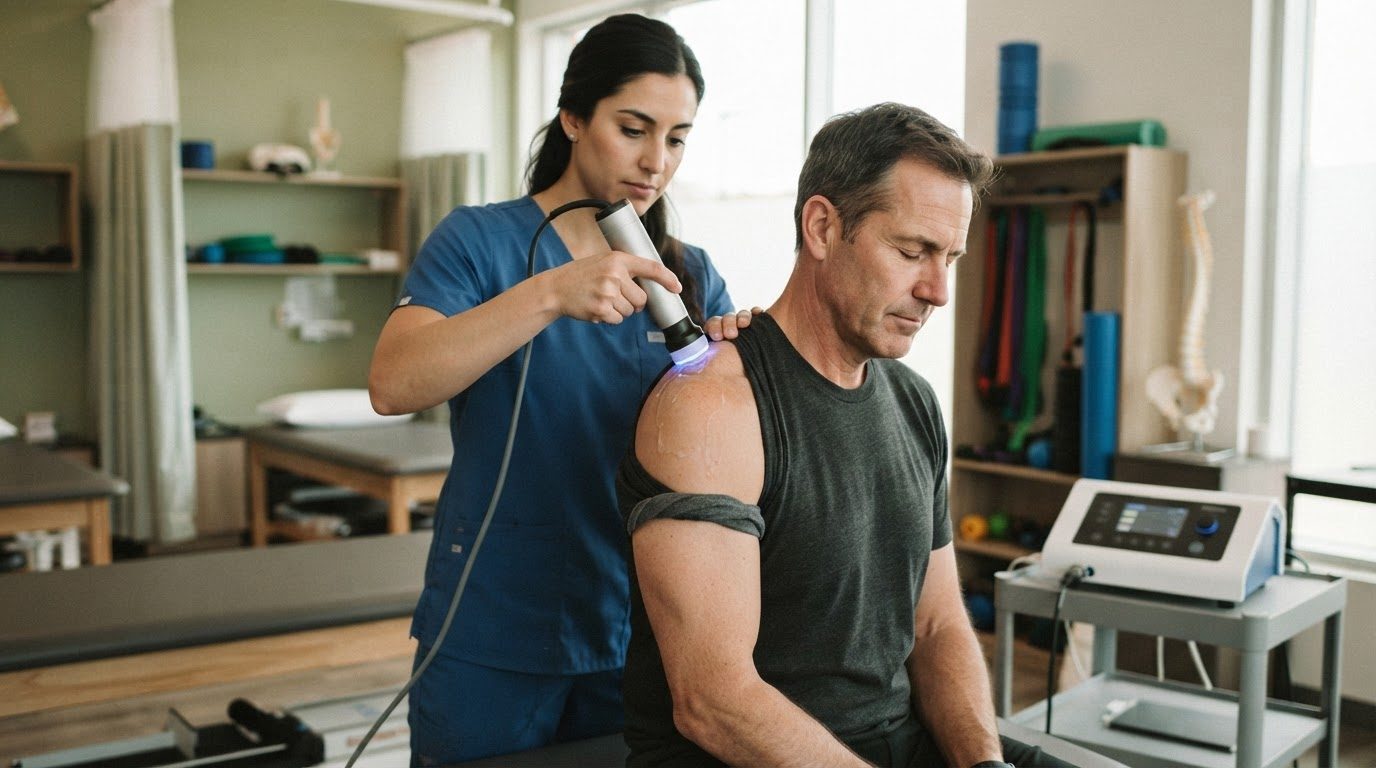
During a shockwave therapy session, you will be positioned comfortably to allow the practitioner access to the affected area. A gel is applied to the skin over the treatment site, similar to an ultrasound procedure. A handheld applicator, connected to a machine that generates the acoustic waves, is then placed on the skin.
The device delivers pulses of sonic waves into the injured tissues. Patients typically describe the sensation as an intense pressure or tapping. While it’s generally not pain-free, most find it well-tolerated. The intensity of the shockwaves can be adjusted to a level that is comfortable for the patient. Each session is relatively brief, usually lasting between 15 to 20 minutes. No local anesthesia is typically used.
After the Session
One of the significant advantages of shockwave therapy is the minimal to no downtime required. Most patients can return to their normal activities, including sports, within 24 hours of treatment. Some may experience a temporary decrease in pain immediately after the session, which might return within a week or two. Over-the-counter pain relievers like acetaminophen can be used to manage any discomfort between treatments.
The results of shockwave therapy are often not immediate but tend to improve over time as the body’s natural healing processes continue. Many patients experience meaningful improvement within three to six sessions, depending on the condition and its chronicity. Progress is monitored throughout the treatment course, and adjustments are made as needed.
Potential Risks and Who Should Avoid Shockwave Therapy
While shockwave therapy is considered safe and effective, it’s not suitable for everyone. As with any medical procedure, there are potential risks and contraindications.
Possible Side Effects
Common side effects are usually mild and temporary, including:
- Mild discomfort or pain during the treatment.
- Redness or swelling in the treated area.
- Bruising or petechiae (small red spots) on the skin.
- Temporary numbness or tingling.
Serious complications are rare. However, because the therapy involves directing intense sound waves under the skin, there’s a slight risk of bruising or hematomas, particularly for individuals on blood thinners.
Contraindications
Certain conditions or circumstances may make an individual unsuitable for shockwave therapy. These include:
- Pregnancy: Not recommended for pregnant individuals.
- Blood Coagulation Disorders or Anticoagulant Medication Use: Due to the increased risk of bruising or bleeding.
- Malignancy: Treatment over areas with cancer.
- Acute Inflammation or Infection: In the treatment area.
- Open Wounds or Skin Lesions: Over the treatment site.
- Growth Plates (in children): Treatment directly over open growth plates.
- Severe Osteoporosis: Could potentially lead to stress fractures in rare cases.
- Nerve or Major Blood Vessel Proximity: Direct treatment over these structures is generally avoided.
- Corticosteroid Injections: Recent injections in the area might require a waiting period before shockwave therapy.
It is crucial to have a thorough discussion with a healthcare provider to determine if shockwave therapy is the right option for your specific condition and health status.
Cost and Insurance Coverage
Shockwave therapy is FDA-approved due to its safety and effectiveness. It is often eligible for payment through Flexible Spending Accounts (FSA) and Health Savings Accounts (HSA). However, it is generally not covered by major medical insurance plans.
Many patients choose to pay out-of-pocket for shockwave therapy because it often provides results when other treatments have failed, and the overall cost can be significantly less than injections or surgical interventions. Before starting treatment, patients are informed about the financial aspects, including any out-of-pocket expenses, allowing for transparency and informed decision-making.