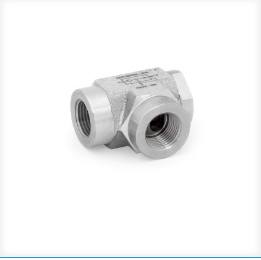
Compressed air does the heavy lifting in countless production lines, yet the components that direct it rarely get much attention until something slows down. Actuators that once fired crisply start to drag. Cycle times creep upward. In most cases the air supply is fine. The valves controlling release and direction are where the real answer sits.
Two Valves That Change How a Circuit Breathes
Letting Exhaust Air Escape the Short Way: Quick exhaust valves vent cylinder air directly to atmosphere instead of routing it back through the directional valve. That shorter path lets the actuator retract or extend noticeably faster. On high-speed packaging or assembly equipment, shaving fractions of a second from each stroke adds up quickly. Fitting one close to the cylinder port gives the best result.
Stopping Reverse Flow Before It Causes Drift: Backflow is a quieter problem. Air moving the wrong way can drop holding pressure, unsettle downstream instruments or let a load drift. A dependable pneumatic check valves supplier offers spring-loaded designs with defined cracking pressures, typically between 0.03 bar and 0.5 bar, which is roughly 0.4 to 7 psi, so reverse flow stops before it causes trouble.
Build Quality Shows Up Where Nobody Looks
Machined Tolerances Decide Sealing Life: Valve performance starts long before installation. Precision engineering of seats, poppets and sealing surfaces decides whether a valve holds pressure for years or starts leaking within months. Tight machining tolerances reduce internal leakage paths, and consistent dimensions mean replacements behave exactly like the parts they replace. Manufacturers working under ISO 9001:2015 systems tend to hold these tolerances reliably.
Matching Metals and Seals to the Environment: Material selection matters just as much. Brass bodies suit general workshop air. Stainless steel, particularly 316 grade, handles washdown areas, marine atmospheres and corrosive process environments far better. Seal compounds deserve equal thought, since nitrile copes with standard lubricated air while fluorocarbon elastomers tolerate higher temperatures. Matching the material to the actual environment prevents premature failures.
Testing Proves What Drawings Promise: Leak integrity is hard to judge by eye. Helium leak detection and hydrostatic burst testing reveal weaknesses that visual inspection misses entirely. A valve that passes these checks at the factory tends to behave itself in the field. Asking how a component was tested is a fair question, and a telling one.
A Five-Minute Check That Saves a Service Call
Points Worth Verifying Before the Order Goes In: Specification sheets can look convincing on paper and still disappoint in service. A short review before ordering catches most of the common mistakes. Perhaps the simplest habit is checking the valve against the actual duty rather than the nominal one. The points below cover what experienced engineers tend to verify first.
- Confirm the working pressure range, including transient peaks, in both bar and psi
- Check port threads match existing pipework, whether BSP or NPT
- Verify flow capacity supports the cylinder speed the application demands
- Review temperature limits for the seal compound fitted
- Request leak test records where holding pressure matters
Reading Ratings With Real Conditions in Mind: Ratings on a datasheet describe laboratory conditions. Real plants run hotter, dirtier and less predictably. Pressure spikes from fast-closing valves can exceed nominal line pressure of 8 bar, around 116 psi, by a wide margin. Building in sensible headroom costs little at the purchasing stage and avoids awkward conversations after an unplanned stoppage.
Keeping Every Stroke as Fast as the First
Faster, steadier pneumatic performance rarely comes from one dramatic change. It comes from valves chosen with care, sized correctly and built to hold their specifications over time. Engineers reviewing sluggish circuits or planning new installations can speak with an experienced fittings and valves manufacturer to find components matched to their exact operating conditions.